Iran’s Economic Dislocation
The Rial as a Stress Indicator
The collapse of the rial has been unfolding in real time. It started to pick up pace following the renewed American blockade. That has resulted in significant pressure on Iran’s economy, since there are fewer export dollars available.
What Happened?
The rial was already depreciating before the blockade because of years of inflation. April 13, 2026, marked the beginning of the first blockade. That was lifted on June 18, 2026, as part of an agreement between the U.S. and Iran. The second blockade began on July 14, 2026. Following the imposition of each blockade, the rial weakened sharply. The blockade has intensified existing Iranian vulnerabilities.
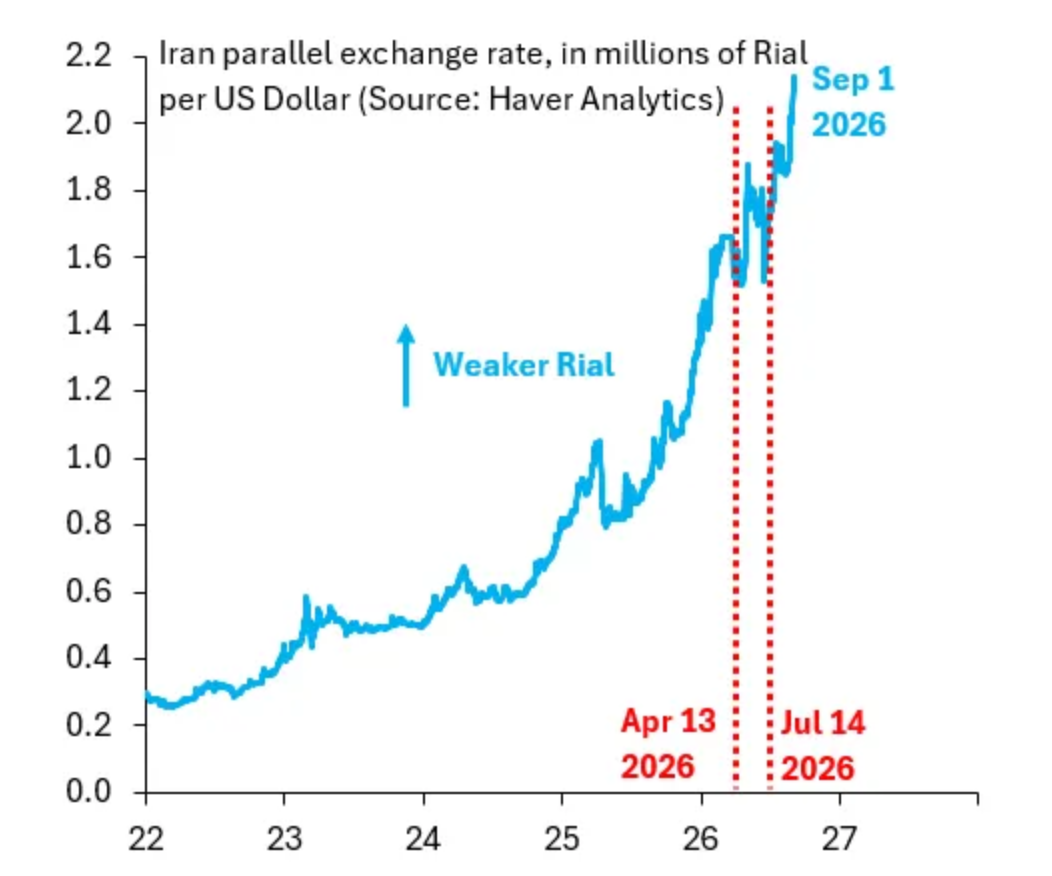 (From Brooks)
Assuming AP and Euronews are correct, between late December 2025 and September 2, 2026, the rial lost approximately 35% of its value against the dollar in the parallel market (what individuals and businesses must pay outside restricted official channels). That’s significant when thinking about the impact on Iranian citizens.
The Transmission Mechanism
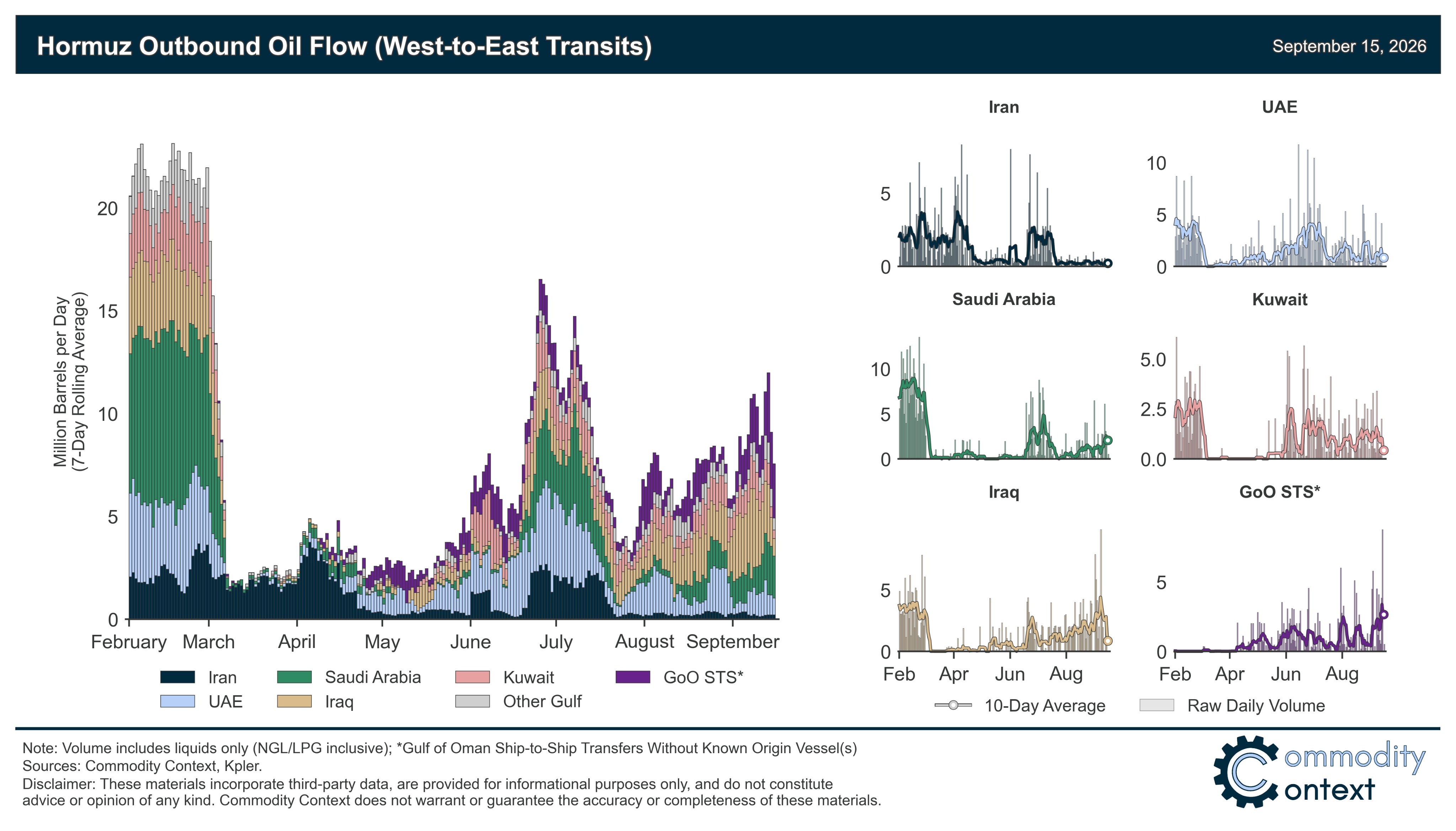
Kpler estimates that Iranian crude shipments fell from roughly two million barrels per day in March to 220,000-255,000 in August. This represents a decline of nearly 90%. As foreign currency earnings decline, importers must compete for a smaller supply of dollars. That means food, medicine, machinery and other imported goods become more expensive. Businesses pass some of those costs to consumers.
Sanctions and financial isolation limit choices for the country. Bessent calls the strategy Operation Economic Outcast. The adjustment therefore must occur through some combination of reserve depletion, rial depreciation, and reduced imports. Before the war, the IMF projected that Iran would have roughly $20 billion in official FX reserves. Its total foreign assets may be greater, but sanctions have left some of that money inaccessible. The present balance is not publicly known.
Depreciation can be a self-reinforcing mechanism. If someone thinks their currency will weaken, then they might want to move their savings into other stores of value. That list includes dollars, gold, or physical goods.
Why Iran is Vulnerable
The blockade is particularly damaging because a large portion of Iran’s oil exports depend on maritime routes. Alternative land routes and smuggling can provide some relief. However, those methods cannot simply replace normal tanker volumes and access to international payments. Even when higher oil exports generated a $14.4 billion current account surplus in 2022/23, the World Bank estimated that this was almost entirely offset by $14.6 billion in net capital outflows.
What Have the Real Effects Been?
The clearest effect has been a collapse in household purchasing power. Iran’s statistics agency reported annual inflation of 53.7% in April, with food inflation exceeding 115%. An Associated Press survey of Tehran shops found that, between February and May, chicken and lamb prices rose 45%, rice 31% and eggs 60%. One Iranian mother told the AP that “our shopping basket has gotten smaller and more limited.” A Tehran grocer similarly reported that some regular customers were buying food on credit because they could no longer pay immediately.
Inflation numbers from Steve Hanke (model-based estimate):
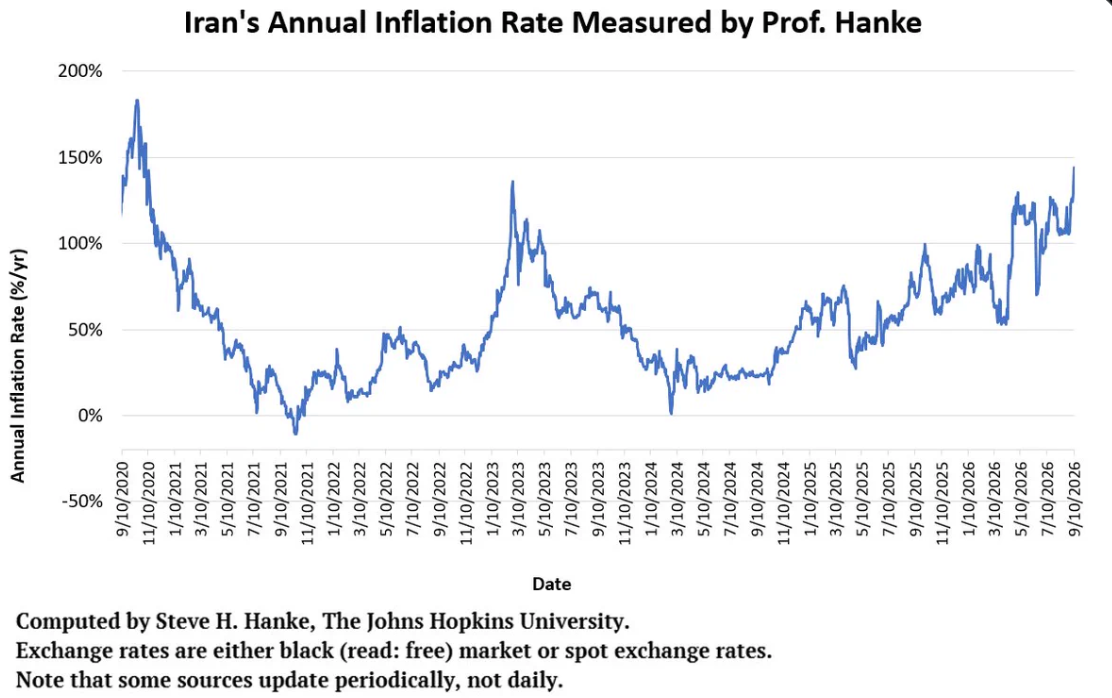
Blockaded trade, strikes, damaged infrastructure and the internet shutdown have added to the pressure. On April 19, an Iranian Labor Ministry official said preliminary estimates indicated that the war eliminated more than one million jobs. The World Bank estimates that Iran’s economy had already contracted 2.7% in 2025/26 and expects shortages and falling real incomes to push poverty higher.
What to Watch
I’d look at how much oil is leaving Iran. If exports are delivered and Iran can access the proceeds, FX pressure should ease. If they remain at current levels, the government will eventually have to reduce imports and spending, draw down more reserves, or finance itself by creating rials – or use some combination of these measures. The last option would cause further depreciation.
The parallel exchange rate provides a good measure of the situation. I’d interpret it alongside food prices. A widening gap, for example, would indicate that foreign currency is becoming increasingly scarce. Rising food inflation or disappearing industrial inputs would indicate an even deeper supply shock. The government may also increase subsidies without matching revenue to protect households. That wouldn’t do much in the long run and could result in more inflation.
Global Market Implications
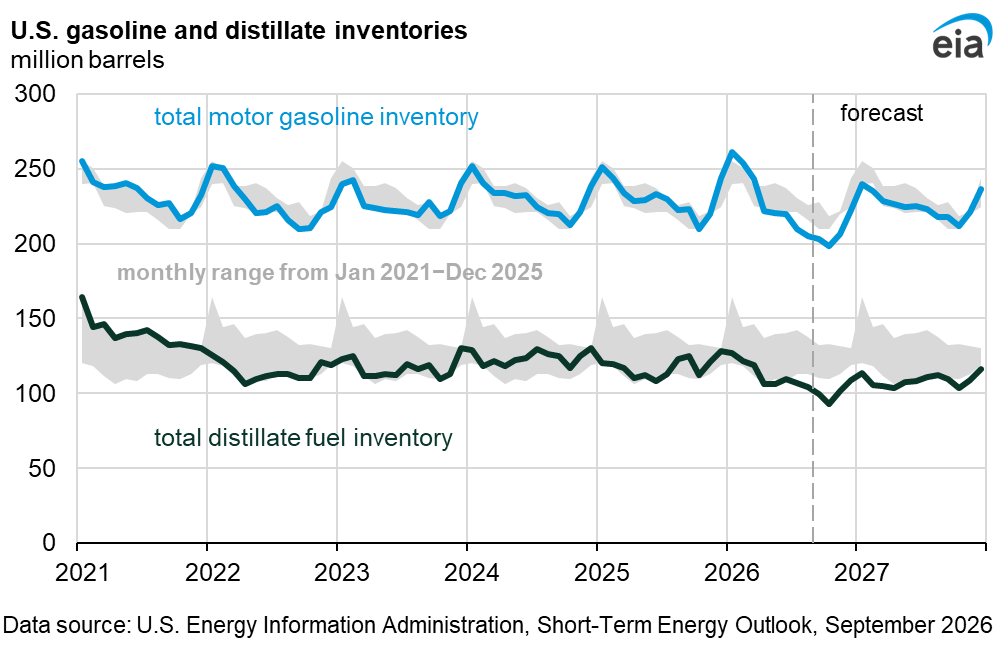
I’ve been watching crack spreads. Refining capacity online is the lowest in modern history (Andreas Larsen). Damage to Gulf and Russian refineries has reduced operating capacity, while restrictions around Hormuz and Bab al-Mandab have affected crude feedstock and refined product shipments. A deal in the Middle East / Ukraine or spare capacity from China coming online can reduce the spread. Russian production could recover before export restrictions ease.
Elevated diesel would initially squeeze farm margins and raise transportation costs. Fertilizer shortages pose the more direct risk to crop yields: if farmers reduce or miss nitrogen applications, expected wheat production would decline. Agricultural commodities could rise once markets begin incorporating those prospective supply losses.
If you think refinery capacity will recover, then short the diesel crack spread. A danger with that is that distillate demand (diesel and heating oil) normally strengthens from autumn into winter, while further refinery/shipping disruptions could make the spread widen further.
A global bond market sell off picked up steam over the past few weeks. There seems to be a lot of back and forth on Twitter (X) about whether it reflects a potential pickup in growth or fiscal concerns. I am in the latter camp. Bonds have been selling off more in the higher debt countries as measured by changes in 10yr yields. The MOVE index has risen but remains well below the March peak, suggesting the selloff has been comparatively orderly.
Rising oil prices have contributed to higher global yields. For example, financial markets are pricing four Bank of England rate increases over the next year. That represents a significant shift in expectations. The German 10-year Bund yield recently hit a 15 year high. Chancellor Merz spoke recently about the dangers of Houthi control around Bab al-Mandab and its potential impact on energy supplies. Equities have been resilient.
Crude flows have partially recovered, but supply remains below prewar levels:
Conclusion
Iran’s economy is getting cooked. That reduces some of its leverage in the Strait. Economic desperation can increase escalation incentives before declining resources eventually reduce the country’s operational capability. I am thinking the main question Tehran faces would be: Is the additional bargaining leverage from continued disruption worth the accelerating loss of revenue, reserves, and domestic stability?