The Case for Gold
I’ve previously talked about gold in the context of Chinese savings, investment and the property crisis. Here, I’d like to focus on its role in portfolios as a hedge against the risks of growing government debt. Physical gold is an asset without an issuer’s promise to repay.
The Question Behind the Gold Thesis
The case for gold starts with a question: how will governments manage their growing debt, and what will that mean for the purchasing power of savings?
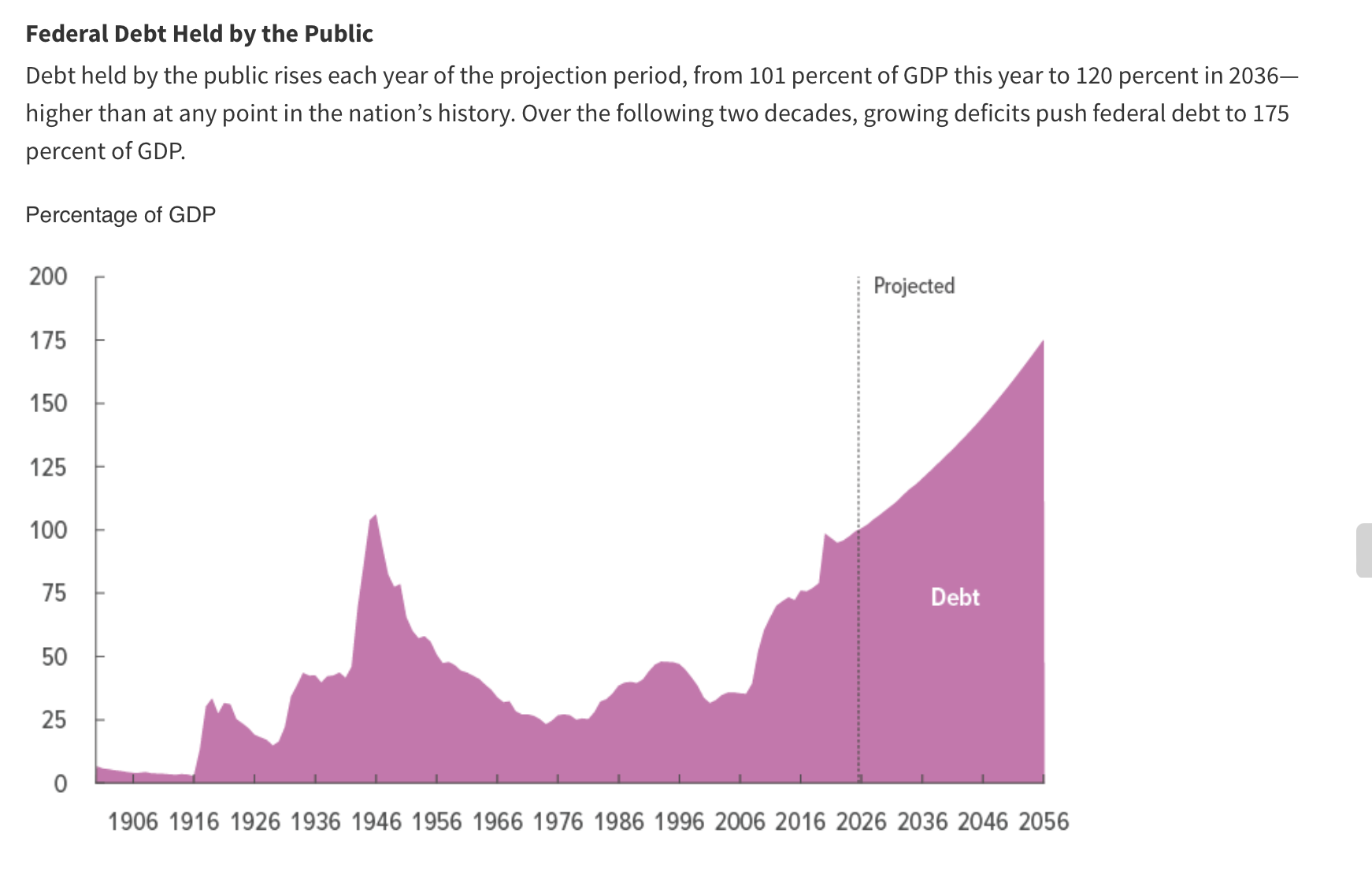
The scale of the problem matters. In February 2026 projections, the Congressional Budget Office estimated that U.S. federal debt held by the public would rise from 101% of GDP in 2026 to 120% in 2036, assuming tax and spending laws remain largely unchanged. The federal government spent $970 billion on net interest in fiscal year 2025. That was about 3.2% of GDP, more than twice its share in 2021.
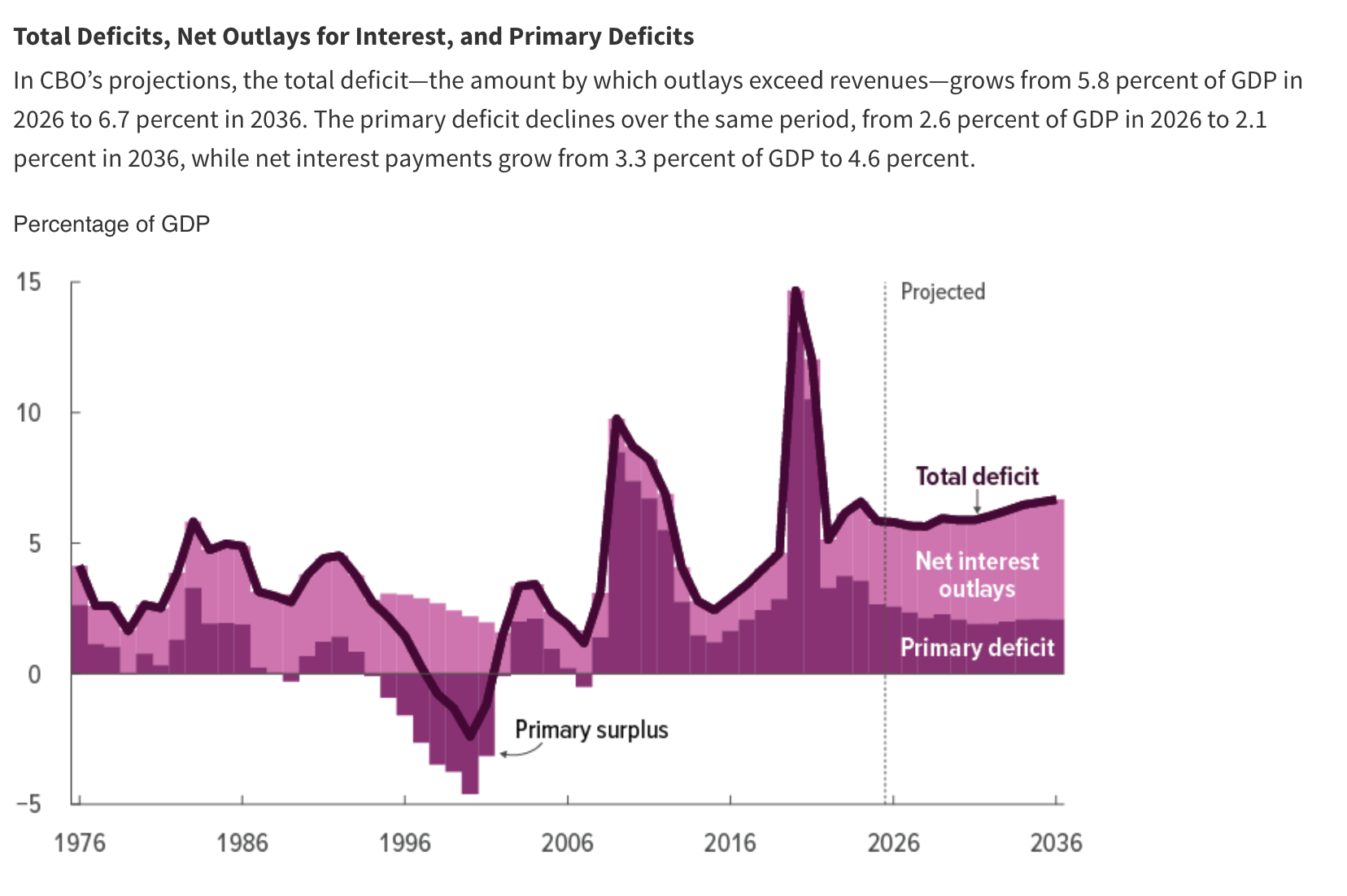
Interest costs can outweigh improvements in the primary budget balance. The CBO’s projections illustrate that risk:
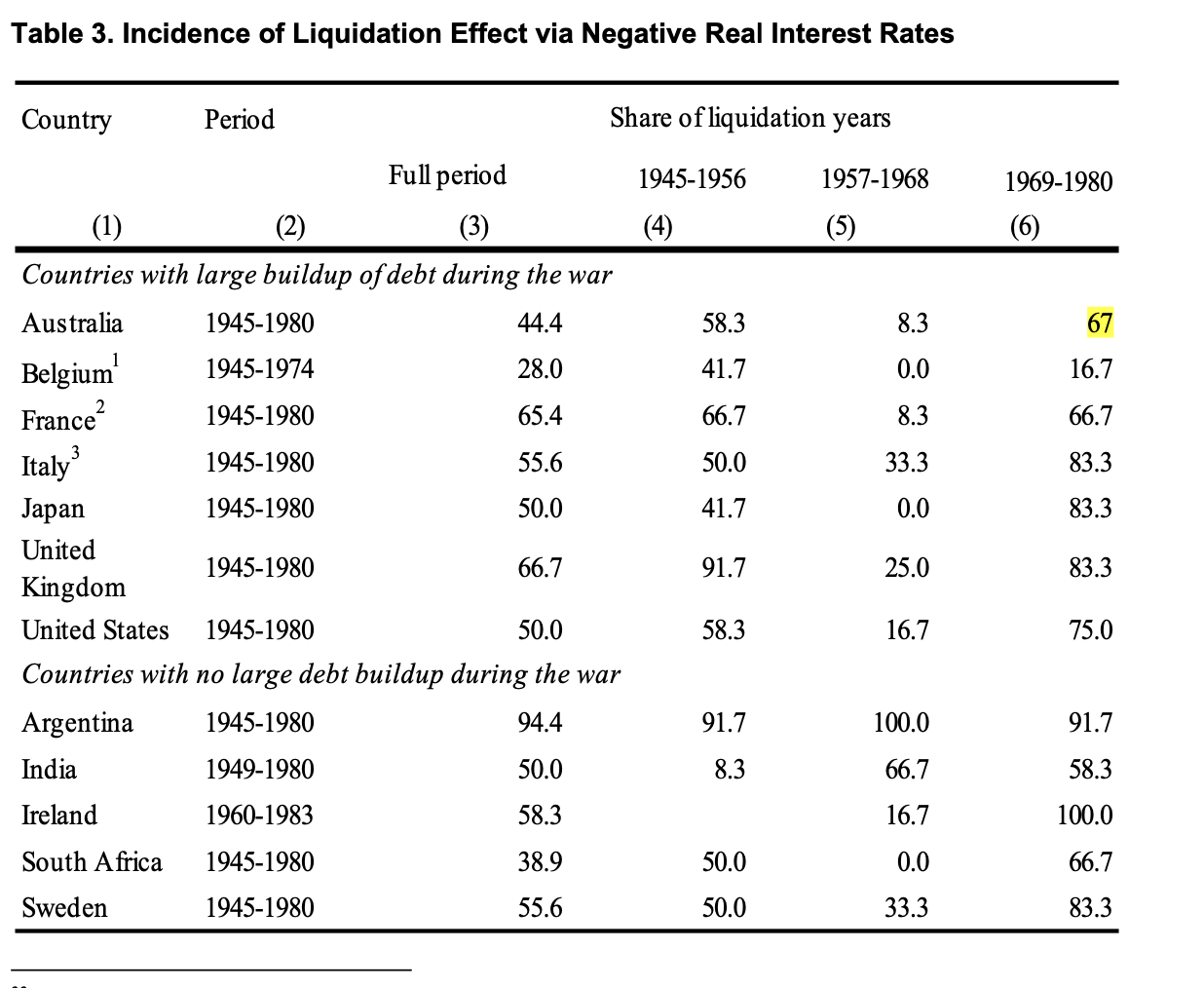
Governments can raise taxes, restrain spending, and/or experience a productivity miracle (AI acceleration?). The first two routes are probably tricky politically. Countries including Britain, France, India, and China have previously run policies to limit savers’ choices while supplying cheaper funding to governments. For example, Reinhart and Sbrancia estimate that Britain’s effective interest rate on government debt was negative after inflation in roughly 67% of the years between 1945 and 1980. That may be a politically viable path.
What Makes Gold a Store of Value?
Gold’s appeal comes from a combination of properties. It lasts, its supply grows slowly, and people across different countries and generations value it. The metal itself resists corrosion and can be melted and reshaped. A coin can become jewelry, and jewelry can become a bar.
The history of the metal stretches back thousands of years. The British Museum dates early gold and silver coins from Lydia, in modern Turkey, to around 600-550 BC. Its monetary role continued into the modern era: foreign monetary authorities could exchange dollars for gold until the United States suspended that convertibility on August 15, 1971.
It is also difficult to produce in large quantities. The World Gold Council estimates that approximately 222,600 tonnes had been mined throughout history by the end of June 2026. The supply isn’t fixed, but expanding it requires exploration, investment, and mining.
Gold is held for several purposes, including jewelry and official reserves. At the same date, central banks held approximately 39,000 tonnes, while jewelry accounted for about 45% of the above ground stock.
Who Bears the Cost of Managing Debt?
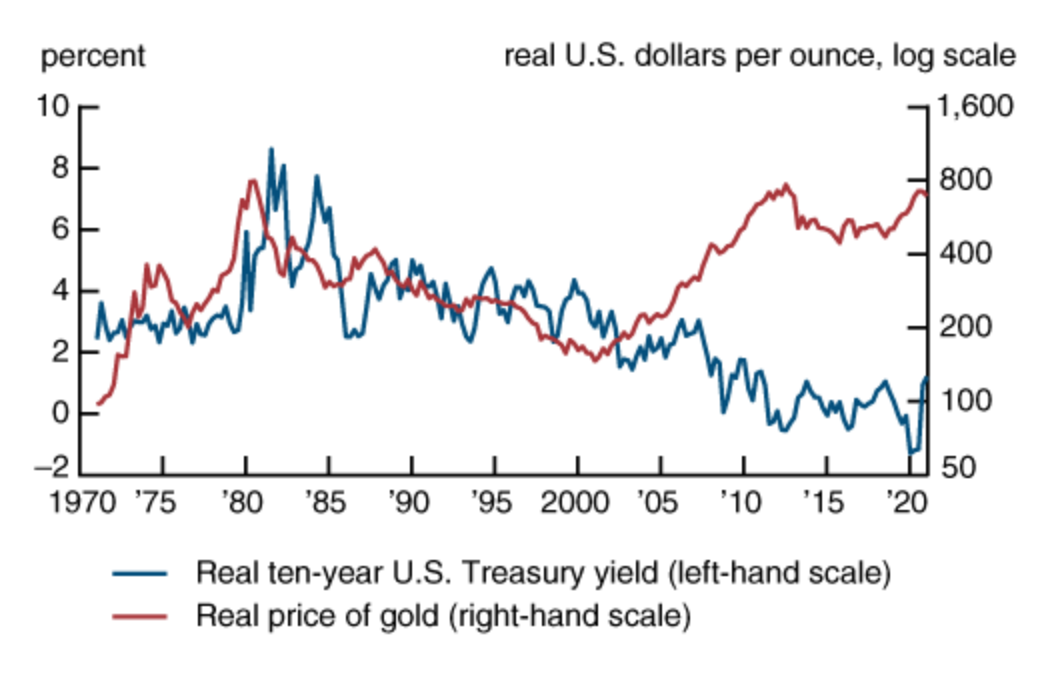
As I discussed in Debt Mechanics and the Dollar, debt sustainability depends on borrowing costs, economic growth, the budget balance, and inflation. Higher yields increase interest expense as governments issue new debt and refinance maturing bonds. Higher yields aren’t automatically bullish for gold. If bonds offer more attractive expected returns after inflation, the opportunity cost of owning gold increases because the metal pays no interest.
The more troubling scenario is that yields rise because investors demand compensation for inflation or deteriorating government finances. Higher borrowing costs can then worsen the fiscal outlook and create pressure to cap interest rates. I think gold could benefit if investors expect the eventual policy response to erode the purchasing power of savings.
The relationship between gold prices and real yields has varied over time:
France illustrates how higher borrowing costs can intensify fiscal pressure. INSEE reported public debt of 119.0% of GDP at the end of the second quarter of 2026. The French government bond maturing in November 2036 sold at an average auction yield of 4.93% on October 1, compared with 3.90% for the same bond on August 6. France can still borrow, but at a substantially higher cost. Its difficulties extend beyond the global increase in rates: Reuters reported on October 2 that its ten-year yield premium over Germany reached 152 basis points, its highest since late 2011.
As mentioned in Eurozone Debt, France cannot independently set monetary policy or devalue a national currency. The ECB has tools to address disorderly markets. My gold thesis does not require a sovereign default, and it would be a mistake to think the U.S, France, Japan, or the U.K. will stop paying or stop rolling over their debt.
What Could Weaken the Case?
The strongest challenge to the thesis is that governments could improve their finances. They do not need to eliminate their debt, but they need a credible path toward stabilizing it relative to the economy. I would reconsider my bullish view if enacted policies and actual budget results showed durable improvement, rather than vague promises to get the fiscal house in order.
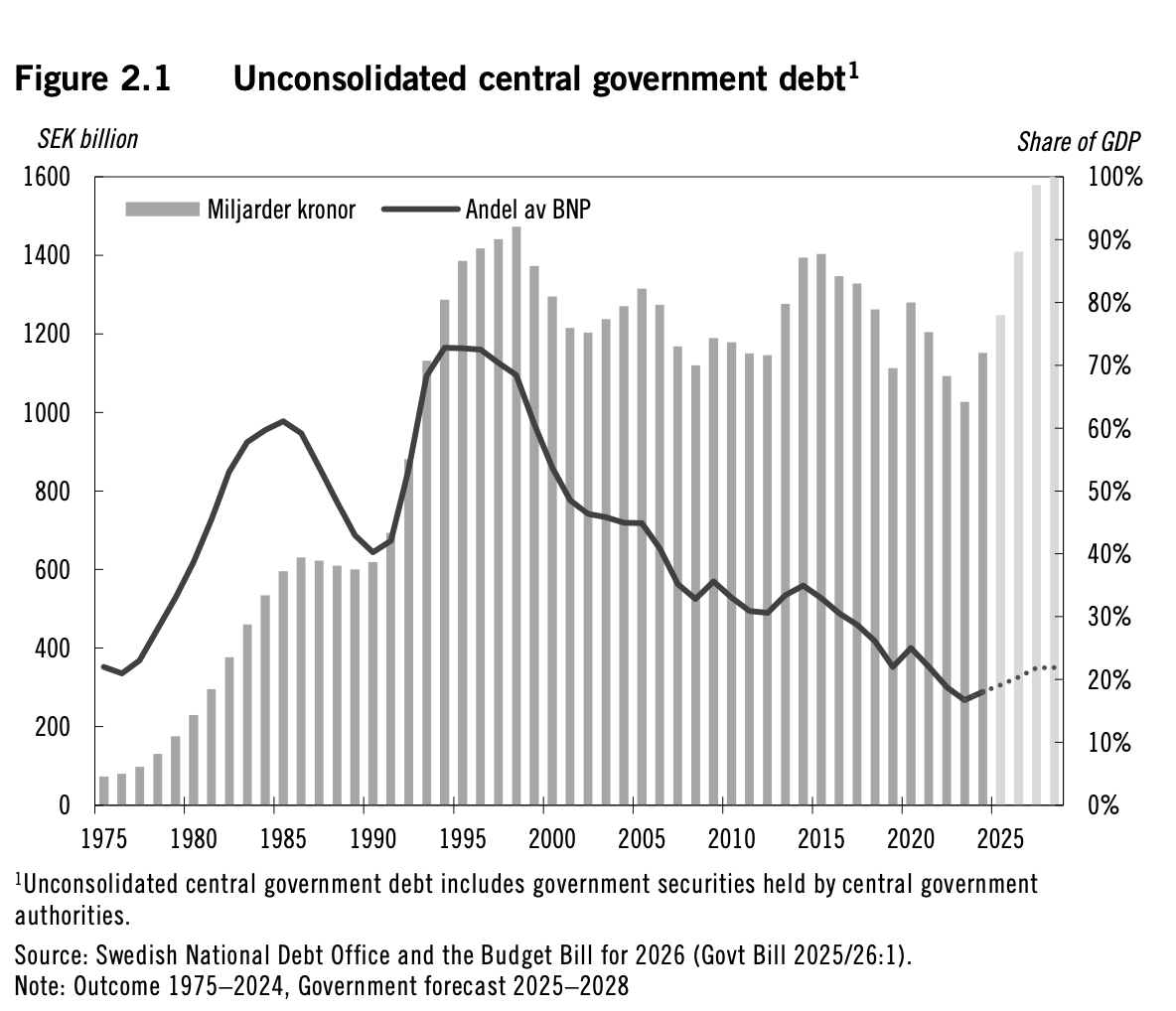
Fiscal deterioration is not inevitable. Sweden provides a useful example: its central government debt declined substantially relative to GDP in the decades following its 1990s crisis.
There is a difference between preserving value over centuries and protecting purchasing power over an investor’s holding period. In The Golden Dilemma, Claude Erb and Campbell Harvey found that gold was an unreliable inflation hedge over practical investment horizons. Their historical analysis also linked higher inflation-adjusted gold prices with weaker subsequent real returns. That does not rule out gold as protection against policy risk, but it means I should not assume it will reliably match inflation or offer attractive returns at any purchase price.
Demand can weaken even while the reasons for owning gold remain relevant. In the second quarter of 2026, central banks made estimated net purchases of 289 tonnes, yet gold backed ETFs recorded approximately 45 tonnes of net outflows. Different groups of buyers do not always move in tandem.
Gold can also fall initially during a crisis. People who need cash may sell assets to cover losses or meet margin calls. The World Gold Council reported this dynamic in March 2020, when gold sold off sharply before recovering later that month.
Conclusion
I am bullish on gold, but that view depends on how governments respond to fiscal arithmetic. One might want holdings that can withstand outcomes beyond the ones policymakers intend. Gold has an important role in that preparation.
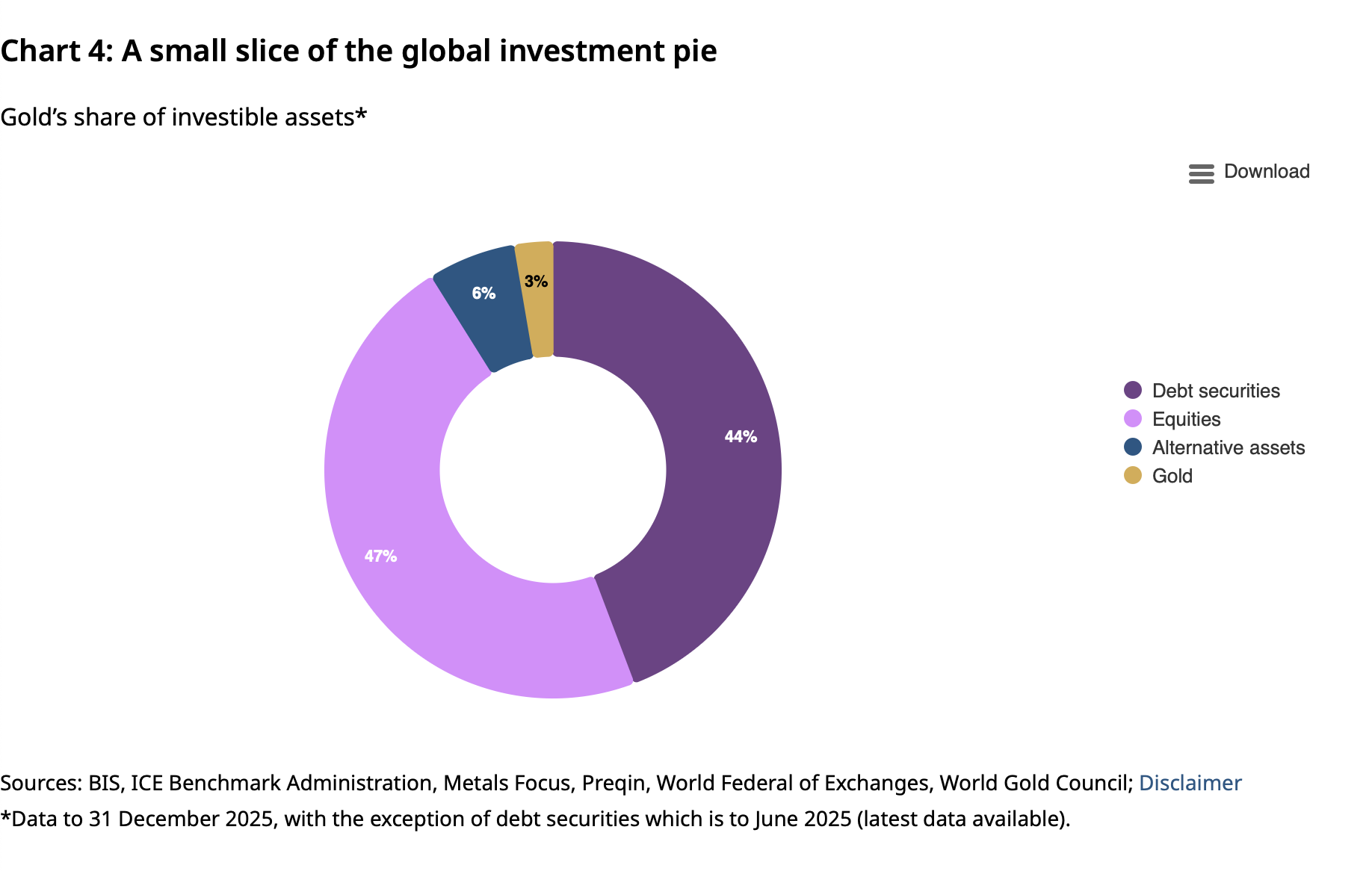
Gold deserves more attention in portfolio construction. Here’s some food for thought: